
How often should Abbotsford acreage septic tanks be pumped?
For acreages and rural-edge properties, the right pump-out timing depends on records, household use, tank size, symptoms, and access. Use this guide to decide when to request routine pumping versus inspection or urgent backup help.
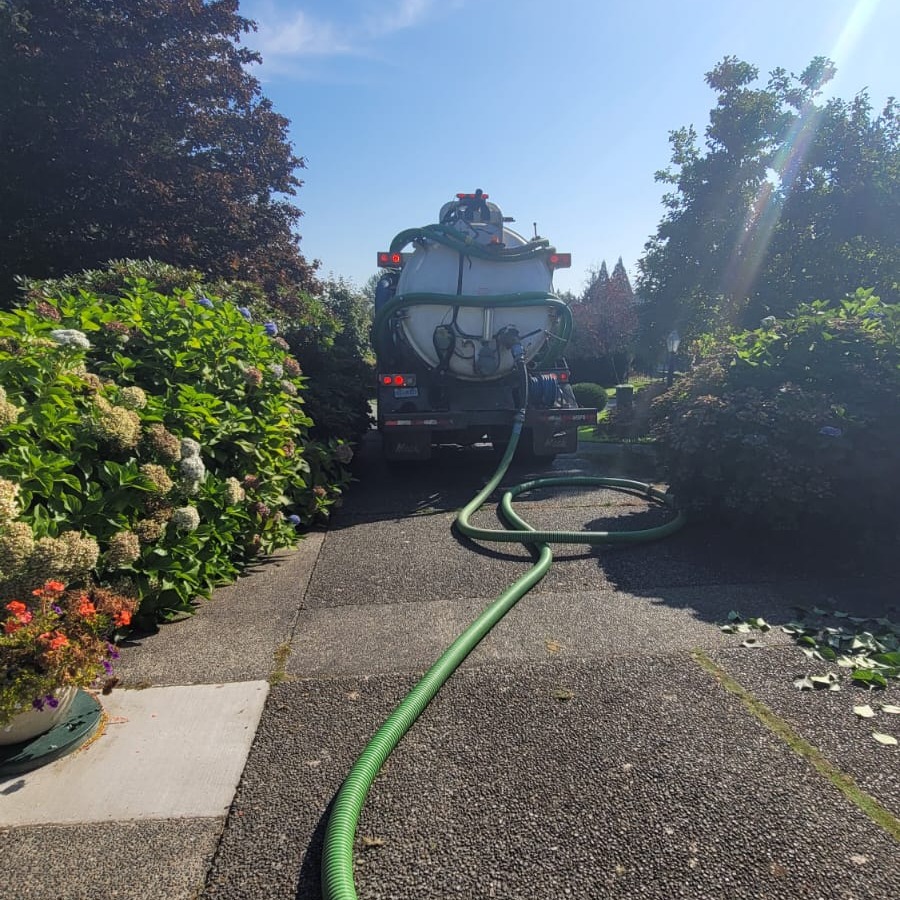
Many homeowners hear a simple three-to-five-year pumping rule. Treat that as a starting point for a conversation, not a promise for every property. A busy household on a small tank, a suite or rental situation, heavy laundry use, or unclear records can change the right timing. A lighter-use home with good records may need a different plan.
Start with the last confirmed pump-out date
The most useful question is not “what do most homes do?” It is “what do we know about this property?” If the last pump-out date is missing, the tank size is unknown, or the previous owner did not leave records, a routine septic tank pumping request can act as a maintenance reset.
- Record the date of the last pump-out, if known.
- Note whether the property has a suite, rental use, large family, or frequent guests.
- Write down any access details such as long driveways, gates, tank lids, or soft ground.
- Share current symptoms even if the request feels routine.
Why Abbotsford acreage properties can vary
Acreages in Matsqui, Sumas Prairie, Bradner, Mount Lehman, Clayburn, Aberdeen, East Abbotsford, and West Abbotsford often have more property-specific details than a typical city lot. The tank may be harder to locate, access may depend on weather or driveway conditions, and the use pattern may not match a simple house-size estimate.
That does not mean every acreage needs unusually frequent pumping. It means the best schedule should be based on the system and how the property is used. The septic maintenance page is the best companion if you are trying to build a practical service record instead of guessing every few years.
Signs your pumping interval may be too long
Routine pumping is a maintenance step. If warning signs are already showing, the request should include those details so the issue is not treated as a generic pump-out only.
- Several drains are slower than usual
- Sewage odours show up near the tank, field, or home
- Wet or unusually soft spots appear near the septic field
- The same symptoms come back after a previous pump-out
- An alarm, backup, or wastewater surfacing makes the issue feel active
If symptoms are unclear or repeating, compare the pumping path with septic inspection and troubleshooting. If sewage is backing up indoors or wastewater is surfacing outside, use the emergency septic service path or call for faster triage.
What to include when you request pumping
Clear information helps the request land in the right service lane. When you use the request service form, choose septic tank pumping or maintenance planning, then add the property details that make your situation specific.
- Abbotsford neighbourhood or area: Matsqui, Sumas Prairie, Bradner, Mount Lehman, Clayburn, Aberdeen, East Abbotsford, or West Abbotsford
- Last known pump-out date or “unknown” if records are missing
- Household size, suite/rental use, or seasonal guest patterns
- Any slow drains, odours, wet spots, alarms, or backup symptoms
- Gate, driveway, tank-location, or lid-access notes
When inspection should come before another pump-out
If the tank was pumped recently and the same symptom returns, the better next step may be inspection rather than booking the same service again. Pumping can remove accumulated material from the tank, but it does not diagnose every possible cause of recurring odours, slow drains, wet field areas, or backup patterns.
Ready to reset your acreage septic maintenance plan?
Use the request service form to share pump-out timing, property access, and symptom details. For urgent backups or wastewater surfacing, call (778) 312-3314 for fastest triage.