
Wet septic field in Abbotsford? How to choose the right next step
A wet patch near the septic field is more concerning when it repeats in the same place, smells like sewage, appears with an alarm, or coincides with slow or backing-up drains. General yard puddling after rain is not enough to diagnose a septic problem. Use the symptom pattern—not the puddle alone—to decide whether to call, request an inspection, or monitor the area.
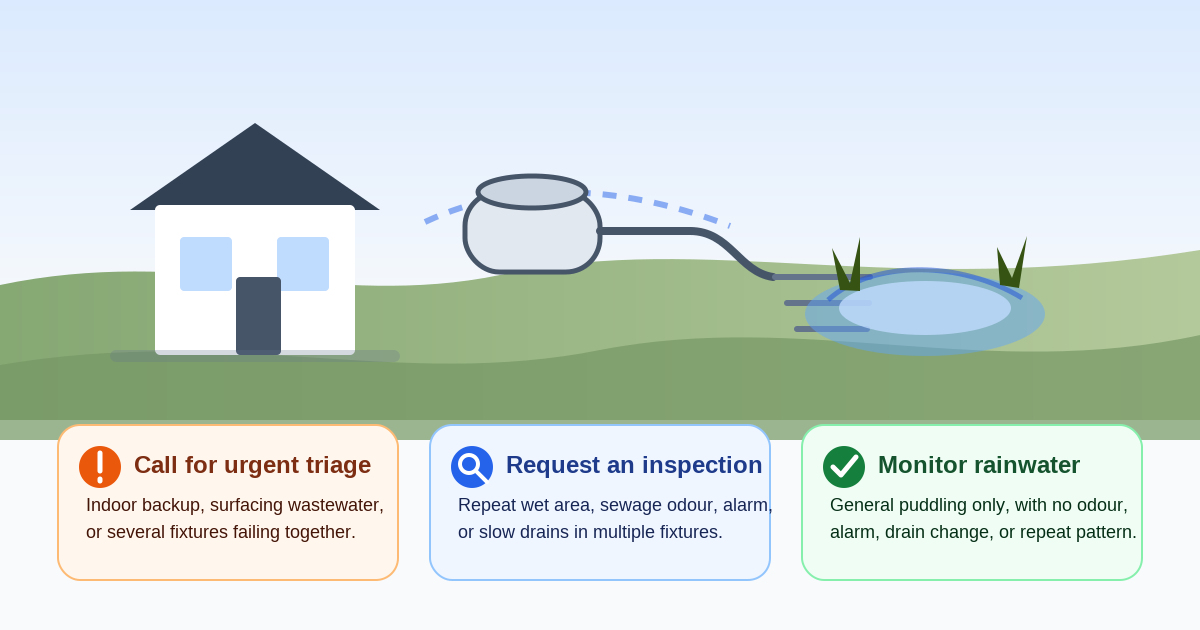
Wet ground is common after fall rain, but a repeat wet area near a known tank or dispersal field deserves attention. This is especially relevant on acreages and rural-edge properties in Matsqui, Sumas Prairie, Bradner, Mount Lehman, Clayburn, Aberdeen, East Abbotsford, and West Abbotsford, where system components may be far from the house and access can soften quickly.
You do not need to diagnose the system yourself. The useful job is to note where the area is, what it looks or smells like, whether indoor drains changed, and whether the same pattern has happened before.
Quick decision: call, request inspection, or monitor?
Signs the wet area may be connected to the septic system
No single visual clue confirms the cause, but several clues together make an inspection request more useful:
- The wet area is directly over or beside the known tank, pump chamber, or disposal field.
- The same patch stays wet longer than nearby ground or returns during normal household water use.
- There is a sewage odour, dark or unusual surface liquid, or unexpectedly lush growth in the same location.
- A septic alarm starts, especially when paired with wet ground or drain changes.
- Toilets gurgle or several sinks, showers, tubs, or floor drains slow down together.
- The tank was pumped recently but the wet area, odour, or drainage symptom returned.
If an odour is the strongest clue, review the outdoor septic smell guide. If symptoms began after a storm, the heavy-rain septic symptom guide explains how saturated ground can expose an existing issue without proving the cause.
When ordinary rainwater may be the better explanation
A low area can collect rainwater even when the septic system is behaving normally. Monitoring may be reasonable when the wetness is widespread across the yard, appears only during rain, drains at a similar rate to nearby ground, and is not paired with sewage odour, an alarm, or indoor drainage changes.
Still record the location and timing. If the same isolated patch remains after the rest of the yard dries, returns repeatedly, or starts to coincide with household water use, move from monitoring to a septic inspection and troubleshooting request.
What to do when wastewater may be surfacing
Do not walk through, touch, mow, dig, or drive over a suspect area. Keep children, visitors, pets, livestock, vehicles, trailers, and equipment away. Reduce non-essential household water use while the condition is triaged, and do not open or enter a septic tank.
For visible wastewater surfacing or spreading, an indoor sewage backup, or several fixtures failing together, use the emergency septic service path and call (778) 312-3314. Describe whether the condition is active, whether it worsens when water is used, and whether rain or recent pumping preceded it.
Should you request pumping or an inspection first?
If the system is stable, the tank is overdue, and there are no active warning signs, septic tank pumping may be the appropriate maintenance lane. A repeat wet patch, alarm, odour, multiple slow drains, or a symptom that returned after pumping is better framed as an inspection and troubleshooting request.
Pumping can remove accumulated tank contents, but it should not be presented as a diagnosis or a guaranteed fix for field symptoms. If maintenance history is unclear, include that information in the request instead of guessing. The septic maintenance page can help with records and planning after the active concern is understood.
What changes if the field is flooded or saturated?
A damp patch after rain is not the same as a flooded septic system. If floodwater covers the system or the disposal area is saturated, do not keep testing the drains or arrange a pump-out as a default remedy. The Province of British Columbia’s sewage systems and flooding guidance says to discontinue use of a flooded system and not open the tank for pumping while the soil remains saturated or flooded. Emptying a tank in those conditions can cause it to shift or float and damage connected pipes.
Call to describe the water level, active symptoms, and safe access before confirming work. Leave tank opening, electrical checks, and decisions about pumping or restarting the system to appropriately qualified professionals. Follow local emergency directions; do not enter floodwater to inspect components. This is wet-weather planning advice, not a current flood alert for Abbotsford.
The wet patch returned after pumping—what should you request?
Request inspection and troubleshooting rather than assuming another pump-out will solve it. Note the service date, whether drains improved, and how soon the wet area returned. An alarm, recurring odour, or changes at several fixtures helps frame the request, but does not establish which component is responsible.
Read the recurring septic symptoms guide or the septic alarm guide for related observations. Do not open lids, reset equipment repeatedly, or add water to reproduce the problem.
What to include in an Abbotsford inspection request
Use the request form with inspection selected and include specific observations:
- Property address and local area
- Where the wet patch sits relative to the house, tank, lids, pump chamber, and known field
- Whether the liquid is clear or unusual, and whether there is a sewage odour
- Whether the patch appears after rain, laundry, showers, guests, irrigation, or ordinary daily use
- Any alarm, gurgling, slow drains, indoor backup, or surfacing wastewater
- Last known pumping or inspection date, including recent service after which symptoms returned
- Gate, driveway, slope, soft-ground, parking, pet, livestock, or hidden-lid access limits
A short inspection request you can adapt
I have a recurring wet area near the septic field at my Abbotsford property. It started [when] and is [still present / returning after rain or normal water use]. I have noticed [odour, alarm, slow drains, or none]. The last known service was [date or unknown]. Access is [firm driveway / soft ground / other restriction]. Please confirm the appropriate inspection scope, access requirements, and available timing.
Keep service records together in the septic service-history worksheet. For an active backup or surfacing wastewater, call instead of relying on an online request. Sending the form does not confirm a booking or immediate dispatch.
Protect the field while the ground is soft
- Keep vehicles and heavy equipment off the suspected field and soft access route.
- Do not dig or probe for system components without reliable records and appropriate guidance.
- Do not redirect roof, sump, or irrigation water toward the tank or field.
- For a stable, non-flooded system, spread normal water use out. If wastewater is surfacing or drains are backing up, stop unnecessary water use and call; for a flooded system, follow the discontinue-use guidance above.
- Write down what improves as the weather dries and what returns during ordinary water use.
The Province of British Columbia publishes current onsite sewage guidelines and resources. Property-specific conditions still require appropriate onsite assessment.
Wet area near your septic field in Abbotsford?
For a recurring wet patch, odour, alarm, or multi-fixture drain change, request septic inspection and troubleshooting with the location, timing, service history, and access details. If sewage is backing up or wastewater is surfacing or spreading, call (778) 312-3314 for urgent triage.