
Sewage smell inside your Abbotsford home: dry drain or septic problem?
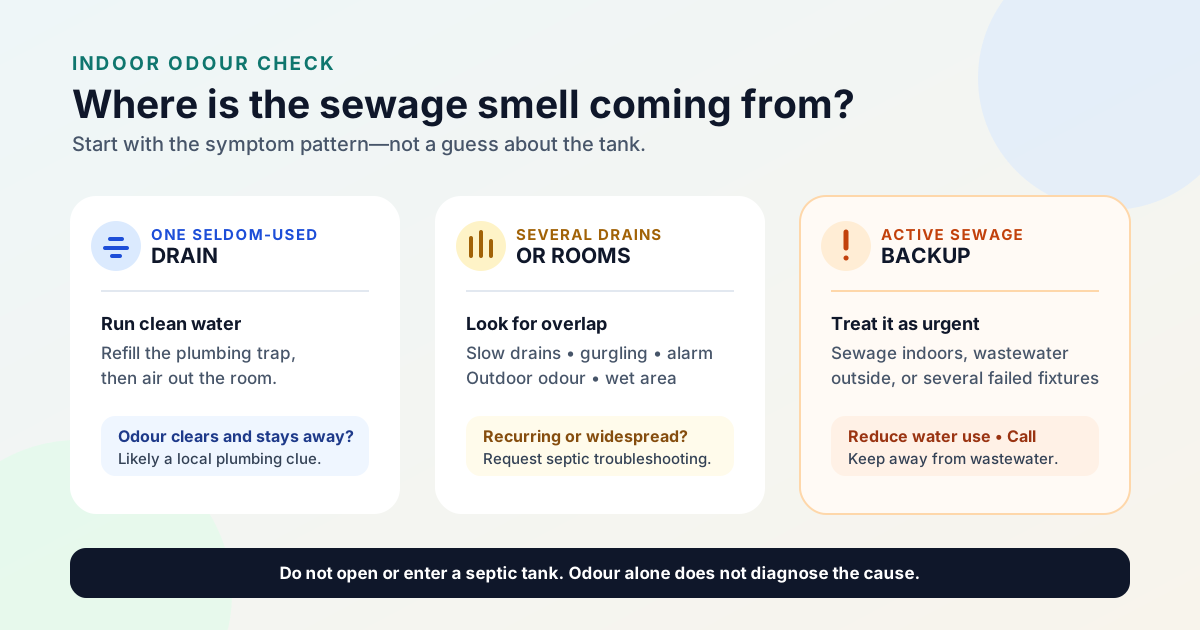
A smell from one sink, shower, or floor drain after it has sat unused can come from a dry plumbing trap. A smell in several rooms—or an odour paired with slow drains, gurgling, an alarm, outdoor wastewater, or a backup—deserves broader septic troubleshooting. The location and the other symptoms matter more than the smell alone.
This question often comes up after a summer trip, when a guest bathroom, basement floor drain, garage drain, or utility sink has not been used for a while. It can also appear during normal use on acreages and rural-edge homes in Matsqui, Sumas Prairie, Bradner, Mount Lehman, Clayburn, Aberdeen, East Abbotsford, and West Abbotsford. A quick location check can help you avoid booking the wrong service—or ignoring a wider septic warning sign.
Quick answer: one drain, several fixtures, or an active backup?
First, find where the odour is strongest
Do not try to identify the cause by leaning over a drain, opening a septic tank, or entering a crawlspace or other confined area. From a normally accessible room, note whether the smell is strongest at one drain or is spread across the house.
- One guest-bathroom or basement drain: a water-filled plumbing trap can dry out when the fixture is not used. Run clean water into the fixture or floor drain, allow the room to air out, and see whether the smell goes away.
- One drain but the smell returns: the cause may still be local plumbing, such as a trap or venting problem. A licensed plumber is the appropriate next call when there are no broader septic symptoms.
- Several drains, rooms, or lower-level fixtures: record which locations are involved and whether drains are slow or gurgling. That pattern is more useful for a septic inspection and troubleshooting request than the phrase “bad smell” alone.
- Strong odour in an unsafe or hard-to-access area: leave the area rather than entering it to investigate. If anyone feels unwell, move to fresh air and contact emergency or health services as appropriate.
A municipal sewer district’s P-trap guidance explains why an unused sink, shower, or floor drain can lose its water seal. That simple check does not rule out a septic issue when other symptoms are present.
Clues that point beyond a dry drain
A dry trap is usually an isolated clue. The case for septic troubleshooting becomes stronger when the odour overlaps with changes elsewhere in the house or yard.
- Two or more toilets, sinks, showers, tubs, or floor drains are slow, gurgling, or giving off odour
- The smell becomes stronger after laundry, showers, repeated flushing, or other heavy water use
- A septic alarm light or audible alarm has appeared
- The same odour is noticeable near the tank, pump chamber, field, or a recurring wet area outside
- The problem returns after a recent pump-out or after the plumbing trap has been refilled
- The last pump-out or inspection date is unknown
If the smell is mostly outdoors, use the separate guide to a septic smell outside in Abbotsford. If drains are also gurgling or slowing, the gurgling toilet and slow-drain guide helps separate one fixture from a broader pattern.
Do not assume that every indoor smell needs pumping
Septic tank pumping is a practical request when the tank is due or the service history is unknown and there are no active warning signs. It is not a diagnosis for every odour. When the smell is recurring, widespread, or paired with alarms, drain changes, wet ground, or a recent pump-out, choose inspection and describe the full pattern.
If the system history is unclear but the house is otherwise stable, use the septic maintenance path to organize records and routine service. HealthLink BC’s onsite sewage maintenance guidance also emphasizes following the system’s maintenance plan, keeping records, and avoiding excessive water loading.
What to do when the smell appears after a vacation
After a trip, start with the least disruptive, most specific check rather than immediately running every appliance in the house.
- Identify any guest sink, shower, floor drain, or utility sink that sat unused.
- Run clean water into that one fixture to refill its trap, then ventilate the room if it is safe to do so.
- Check whether the odour clears and stays isolated. Do not mask it with drain chemicals or assume a product has diagnosed the cause.
- Before catching up on several loads of laundry, notice whether toilets and drains are already slow, gurgling, or backing up.
- If odour returns at several fixtures, an alarm appears, or outdoor symptoms are present, reduce unnecessary water use and request septic troubleshooting.
This is especially useful on an Abbotsford acreage where the tank, field, pump components, and indoor plumbing may be far apart. A simple timeline—“returned Sunday, smell started at the basement drain, two toilets gurgled after laundry”—gives more useful intake information than guessing that the tank is full.
When an indoor sewage smell is urgent
Odour alone does not prove an emergency. Treat the issue as urgent when sewage is backing up into a toilet, tub, shower, sink, or floor drain; wastewater is surfacing outside; several fixtures stop draining together; or the problem worsens each time water is used.
- Pause laundry, dishwashing, long showers, repeated flushing, and other non-essential water use.
- Keep children and pets away from sewage or surfacing wastewater.
- Avoid contact with contaminated water and do not attempt to open or enter the septic tank.
- Use the emergency septic service path and call (778) 312-3314 for the fastest triage.
What to include in an Abbotsford service request
You do not need to diagnose the source. When you request service online, include the details that separate a local drain smell from a system-wide concern:
- The property address and area, such as Matsqui, Sumas Prairie, Bradner, Mount Lehman, Clayburn, Aberdeen, East Abbotsford, or West Abbotsford
- The exact room and drain where the smell is strongest
- Whether one fixture or several fixtures are involved
- Whether clean water in a seldom-used drain cleared the odour, and whether it returned
- Any slow drains, gurgling, backups, alarm activity, outdoor odour, or wet areas
- What happened just before the smell appeared, such as returning from a trip, laundry, guests, heavy rain, or a power interruption
- The last known pump-out, inspection, or repair date
- Known tank location, driveway, gate, soft-ground, pet, or livestock access notes
The Abbotsford service-area page has more local property and access context. If the only clue is one drain that keeps losing its water seal and there are no septic symptoms, tell a plumber that exact pattern instead.
Indoor sewage smell plus other septic symptoms?
Use the request service form to share the odour location, affected fixtures, timing, service history, and outdoor clues. If sewage is backing up, wastewater is surfacing, or several fixtures have stopped draining, call (778) 312-3314 for urgent triage.