
Holding tank or septic tank? What Abbotsford owners should know before booking a pump-out
A septic tank sends treated liquid out to a disposal field. A holding tank is sealed and stores everything until it is pumped. That one difference changes how often the tank needs a pump-out, what an alarm means, and how urgently you should call. If you are not sure which one your property has, say so in your request rather than guessing.
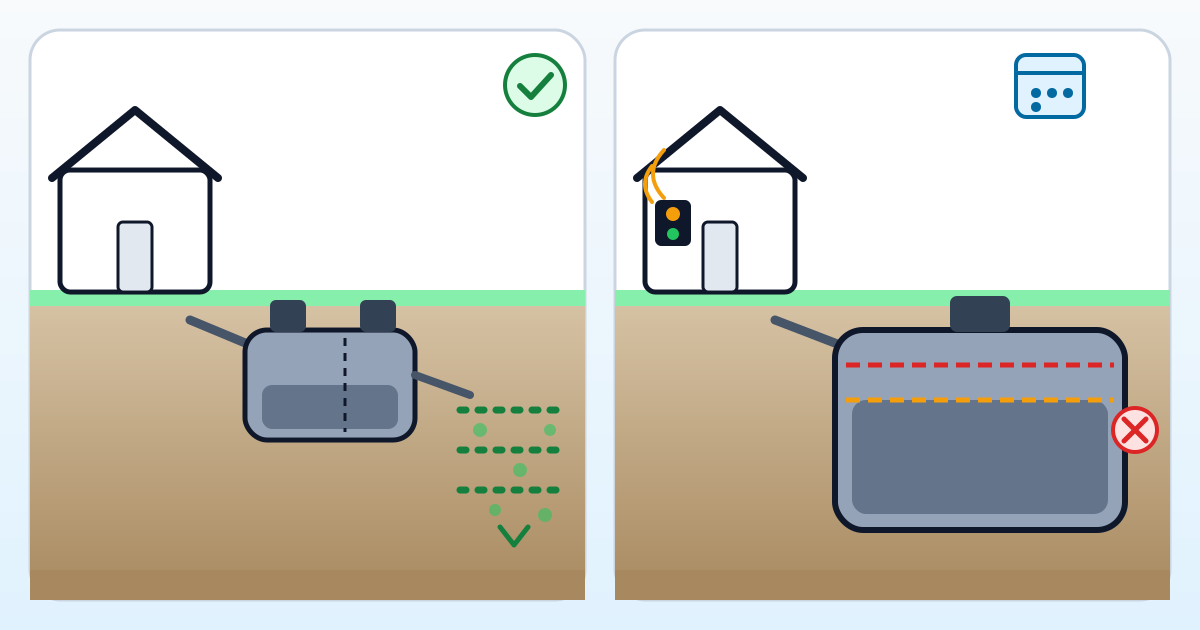
Quick answer: if your holding tank alarm is sounding, cut water use right away and arrange a pump-out. A holding tank has no outlet, so it keeps filling until it is emptied. With a standard septic tank, a one-off alarm or slow drain is more often a reason for inspection and troubleshooting than for an immediate pump-out. If sewage is backing up indoors or overflowing outside, either way, call (778) 312-3314.
Most rural-edge homes in Matsqui, Sumas Prairie, Bradner, Mount Lehman, Clayburn, Aberdeen, and East and West Abbotsford use a septic tank and disposal field. Holding tanks are less common, but they turn up on properties where a field was not practical, on some outbuildings and secondary structures, and on temporary or interim setups. New owners sometimes find out which one they have only when the first alarm goes off.
How the two systems differ
Clues that you may have a holding tank
- No disposal field appears on any records, and none can be found on the property
- An indoor or wall-mounted alarm panel, often with a power light, that reports high tank level rather than a pump fault
- Previous owners booked pump-outs much more often than a typical septic schedule
- Purchase documents, a permit, or a maintenance plan that mention a “holding tank”
- A single large access riser close to the driveway or road
None of these proves it on its own. A septic system with a pump chamber also has an alarm panel, and the septic alarm guide covers that case. If you have no records, Fraser Health has a sewerage system file information request for property owners. A file may not exist or may not match what is in the ground today.
What Fraser Health expects from holding tanks
Fraser Health's published sewage holding tank requirements (an Environmental Health bulletin, revised December 2016, checked November 13, 2026) set out minimum conditions. Among them:
- A permit is needed before a holding tank is installed, and an Authorized Person handles design, installation, and certification
- Two high-level alarms, visual and audible, set to activate at about 75% and again at 90% of capacity, with the panel placed where occupants can see and hear it
- No emergency overflow piping from the tank
- The owner keeps a contract with a commercial pump-and-haul service for regular, scheduled removal under an approved maintenance plan
- The tank is located with easy access from the road for the pumping truck
- Local bylaws may also regulate holding tanks, and the stricter rule applies
This is a summary, not legal or permitting advice. If you are buying a property with a holding tank or planning to change one, check the current bulletin and talk to Fraser Health and the City of Abbotsford building department.
What each alarm usually means
Planning holding tank pump-outs
Because a holding tank fills in step with water use, it helps to track pump-out dates and how long the household went between alarms. Usage changes such as holiday guests, a new baby, extra laundry, a home business, or a tenant moving in can shorten that gap a lot. The service-history worksheet works for holding tanks as well as septic tanks.
Before winter, check that the access route stays usable. Gates, long driveways, soft ground, and parked vehicles can all slow down a pump-out you need soon. The pumping preparation checklist and the lid-location guide cover access in more detail. For a regular plan, see septic maintenance.
Questions to ask when you request service
- Can you pump a holding tank, a septic tank, or both, and does the quote change depending on which one it is?
- Does the tank size or volume affect the visit or the quote? The quote-factors guide explains the usual variables.
- Can the tank type, volume pumped, and lid location be noted on the invoice?
- If I need regular holding tank pump-outs, how should I arrange them?
- If the alarm comes back sooner than expected, what should be checked?
When it is more than a pump-out
If a holding tank alarm goes off soon after a pump-out, water may be getting in from somewhere other than the house. Possible sources include a leaking fixture, a running toilet, or groundwater or surface water entering through a riser or joint, especially in wet weather. With a septic system, a wet field, odours, or slow drains that come back after pumping point to septic inspection and troubleshooting. The recurring-symptoms guide explains why. If you are not sure what to ask for, use the pumping-versus-inspection guide.
If sewage is coming up through fixtures or onto the ground, stop using water and use the emergency septic service path by calling.
A short message you can adapt
I would like to arrange a pump-out at my Abbotsford property. Tank type: [holding tank, septic tank, or not sure]. Alarm status: [none, first alarm, second alarm, and when it started]. Last pump-out: [date or unknown]. Lid location: [known, or unknown]. Access: [driveway, gate, slope, ground conditions]. Other symptoms: [none, or describe]. Please let me know what information you need and what appointment options are available.
Paste your details into the service request form. Submitting a request is an enquiry, not a confirmed booking or dispatch.
Holding tank alarm on, or not sure what you have?
Use the request service form and include the tank type (or “not sure”), alarm status, and last pump-out date. If the second alarm is sounding or sewage is backing up, call (778) 312-3314 for urgent triage.